You have work to do in the world. You know it. I know it. Because it’s true for each of us.
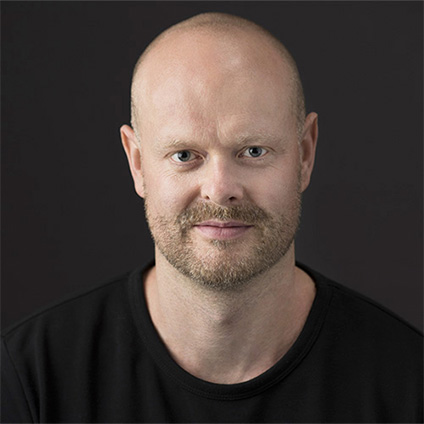
These are the opening words of a powerful new book by my dear friend and soul brother, Ewan Townhead.
It’s called Artist, Merchant, Seeker, and it explores sacred work, creativity, and how we become more aligned with what we’re truly here to do.
Ewan and I have been close friends for almost 20 years. We’ve had countless extraordinary conversations about spirituality, consciousness, business, and the soul’s path — and for more than a decade, he played a formative role in the flourishing of Coaches Rising.
My gratitude for him runs deep.
We’ve talked about recording a podcast together many times over the years. But for reasons that now feel beautifully orchestrated, this is the moment it finally happened — and now we have both a conversation and a book to share with you.
Artist, Merchant, Seeker is a brilliant book that feels both timeless and timely.
As Ewan says in our conversation:
I think it’s perhaps more important than ever — and perhaps part of the transformation we’re in collectively — that we become intimate with that which we feel like we’re really here to do.
At the heart of his book are 3 archetypes: the artist, the merchant, and the seeker. They correspond with three ancient dimensions of reality: the beautiful, the good, and the true. And to I, we, and it from Ken Wilber’s Integral Theory.
Ewan describes the framework as a map. But it’s so much more than that.
It’s a portal.
When you dive into the material, it’s like this alchemical process begins, and aspects of you that have been dormant begin to reveal themselves to you.
The artist speaks the language of beauty.
This is our creative dimension — the part of us that feels drawn to make things that excite us, that we find beautiful or joyous, and to express what we see and feel in forms that other people can experience.
Ewan describes the artist as a vessel, because as anyone who has deeply practiced the creative act will recognize, we are not entirely in control of what we make.
Creating art is a process of opening up so something can come through us. It’s our unique expression, but it also feels as though it comes from somewhere else.
Our work is to allow it — and then to craft it.
The merchant speaks the language of goodness.
This was the part of the framework that surprised even Ewan.
As he says, it was “the one that was a kicker for me, that I had to process a little bit” — the recognition that the merchant, at its root, speaks the language of goodness.
There is plenty of merchant shadow in our world, and we can see how destructive that archetypal power can be. But in its integrated form, the merchant asks:
What do I have that is really valuable and good for the people around me?
How do I get it into their hands?
And how can we trade and exchange in a way that allows us both to benefit — and the people around us to benefit too?
The seeker speaks the language of truth.
The seeker is on a knowledge quest:
Who am I?
Why am I here?
What is the nature of this world?
But as we move along the seeker’s path, we’re asked to weave through paradox — to recognize that truth is far more nuanced than we originally thought.
Can we hold multiple truths?
Can we remain humble enough to have our minds changed about something we were once certain was true?
These archetypes awaken when you spend time with them.
Unlike a typology system where you locate yourself as one archetype, all three of these live within each of us.
We may be more native in one. Another may feel foreign. And another may be suppressed.
One striking example Ewan gave is the consequences of suppressing the artist.
We all have an inner longing to create and express ourselves. But society is built around most of us doing something very different for most of the day. And art takes something many of us don’t have enough of — time and space. So the artist is routinely suppressed.
But we all long for beauty.
So what do we do? We consume beauty instead of creating it.
As Ewan says:
I think it’s more common today that people spend a lot of time consuming the beauty of others rather than making it themselves. And I think that has a cost on your vitality.
I could feel that part of the conversation in my body.
I went to art school. I made art. I was a DJ. And in recent years, I’ve recognized that I had suppressed my own artist.
That soul force living inside artistic expression — the attunement to what wants to emerge fresh — has always been a key part of both my coaching and entrepreneurial work.
As I’ve begun giving my artist space again, it has been incredibly life-giving.
And as Ewan and I spoke, I could feel the psychoactive quality of his framework in real time. Something was being illuminated and invited back into relationship.
This is where the magic happens
As we make room for more of ourselves, the different archetypes begin to interrelate. Things start joining together in ways we couldn’t have planned or produced through strategic thinking alone.
Ewan calls this synergy — the mysterious, nonlinear creation that becomes possible when previously separated dimensions of ourselves work together.
It’s like different colors are blending together to make something new.
This is where magic begins to enter.
And it changes both what we create and who we are. So that the work we do becomes an expression of our soul’s purpose, in service of the whole.
I’m so happy Ewan came on the podcast to share his beautiful new creation with us. I think it’s genuinely brilliant.
You can listen to the full conversation here.
And if you’d like to read the book and go on your own journey into the work you feel you’re truly here to do, Ewan is generously offering the digital version of Artist, Merchant, Seeker for free here.
With care,
Joel