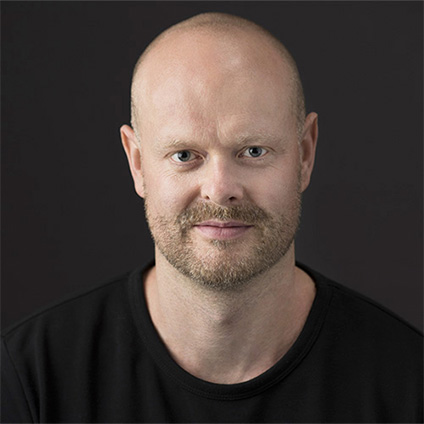
I just had a great conversation with Steve March — a transformational and visionary coach, and one of my favorite teachers.
We did a deep dive on some pivotal coaching topics for a fun project we’re working on behind the scenes.
Steve has been one of the most influential teachers in my own career — and he completely transformed my approach to coaching.
One key principle he taught me is the importance of supporting clients to embrace their experience — even if it’s uncomfortable — rather than always seeking to move beyond the challenge of the moment.
While it might seem like a small shift, it takes the coaching conversation into an entirely different paradigm.
I call this move Radical Inclusion.
First, let’s zoom out
As a whole, transformational coaching is a process of integration — helping clients integrate the patterning that sits beneath the topics they bring into coaching.
And as that integration happens, something begins to shift. Clients experience more freedom. Life starts to bother them less. It’s as if they access a more expanded sense of self — one with more wisdom and a wider range of possibility.
What sits at the heart of this shift is a departure from what Steve calls the self-improvement paradigm — the belief that the end of suffering is a place we can reach if we can just improve ourselves enough.
So often, self-improvement is built on an internal struggle — a subtle (or not so subtle) message that who I am right now isn’t enough. That if I strive, fix, and push myself to get somewhere else, then I’ll be okay. And this creates tension.
As transformational coaches, we’re doing something different…
From fixing to including
We’re helping clients surface their conditioning by bringing them into the present moment — guiding them to contact the sensations, emotions, and patterns that are alive within or around the topic they’re exploring.
And from here, we introduce something simple, but powerful: radical inclusion.
We might ask: “As you notice these sensations and emotions, is it okay for them to be here right now?”
And importantly, “no” is a perfectly valid answer.
A client might notice, “I don’t like this. A part of me wants this to go away.” And that, too, gets included.
This is the essence of the practice.
Radical inclusion isn’t something we impose from a self-improvement mindset — where we try to “do it right.” It’s more of an attitude. A felt sense. A quiet allowing of what’s already here.
As clients sit with the question — is it okay for this to be here right now? — they often begin to land in a simple acknowledgment: this is here, and I can feel it.
They may start to notice discomfort or tension in a new way. And as they include it, something begins to shift. Their experience starts to reveal more of itself.
The key is that we’re not doing this to force integration to happen.
We’re cultivating the capacity to meet experience with unconditional regard — as if it could be here forever. (Even though it won’t be.)
And in doing so, we begin to access something deeper — a kind of dynamic intelligence that naturally unfolds when experience is allowed to be as it is.
A simple way to experience this for yourself
You might try this for yourself.
Think of something that’s been challenging for you recently — nothing too intense, just something present. Bring it into your awareness.
Then notice what happens in your body. What sensations are there? What emotions?
You might feel contraction, frustration, or tension.
And then gently ask: Is it okay for this to be here right now?
See if you can simply acknowledge what’s arising. Let it be as it is.
You may notice another Part appear — one that wants to fix, solve, or move away from the experience.
Include that too. And just observe what happens.
Often, in this simple act of allowing, something begins to open. Experience unfolds. Insight emerges — not because we forced it, but because we made space for it.
I invite you to play with this principle the next time you’re with a coaching client — and see what unfolds.
With care,
Joel